
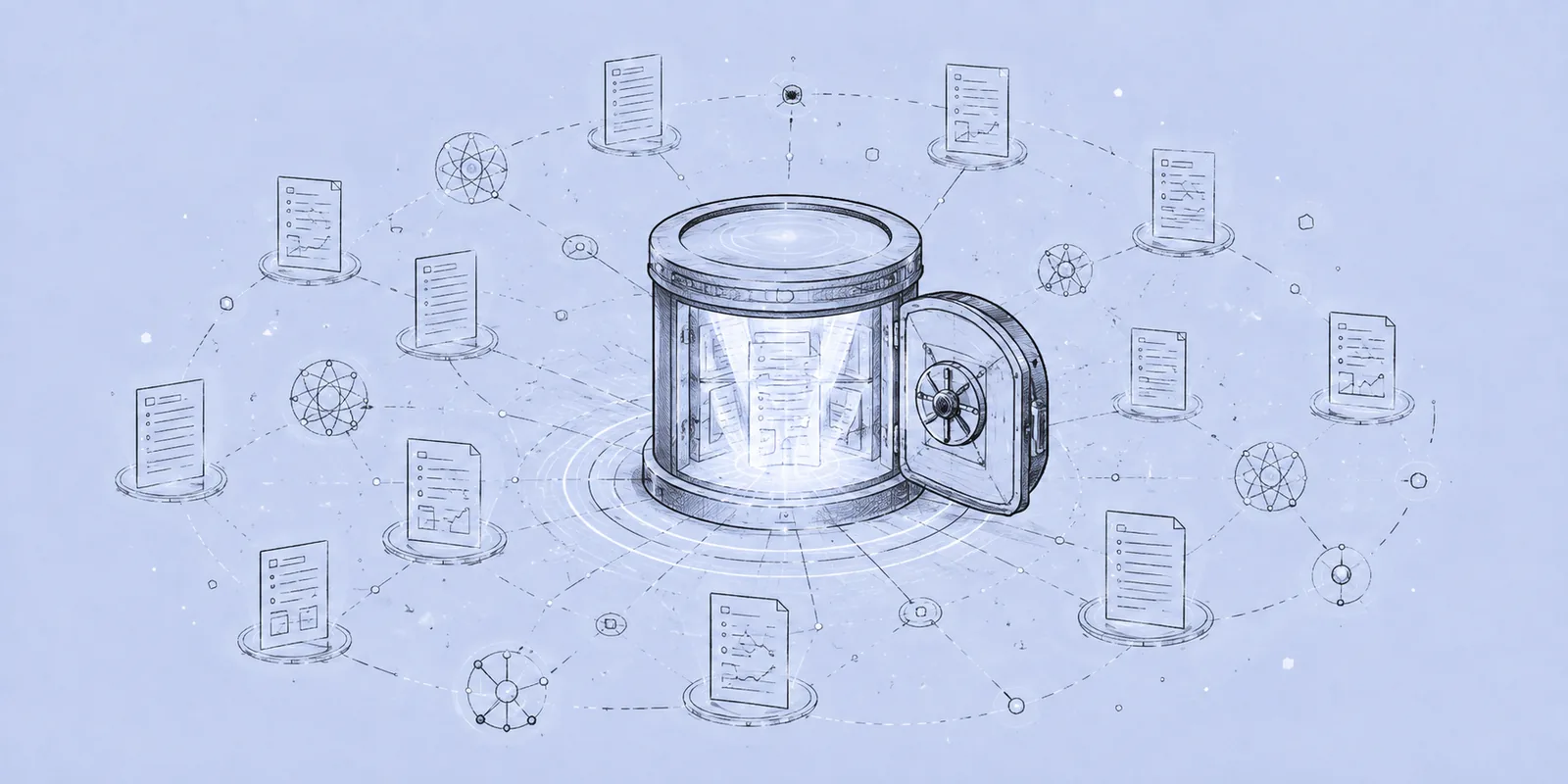
A patent report tells you who filed the most. A vault tells you what is actually happening in the technology. Here are ten things you can do with one, counting down.
10. Go beyond technology trends
When you get a patent report you get something like the top ten players, but it tells you nothing more than that. With Strata vaults you go deeper. You can take a single technology and work out who holds the key positions in that space.
For example, a question like this:
Which are the key Chinese players working on neutral atoms, with a focus on how to control one atom, or one selected subset, inside a dense array without disturbing its neighbours?
Will yield an answer such as:
Chinese activity on selective addressing in dense atom arrays is real but thin, and it sits with institutes and telecom or IT majors rather than with dedicated neutral-atom startups. The interesting part is that nobody Chinese is trying to focus a tighter beam. Every serious CN approach in this vault sidesteps the addressing beam rather than sharpening it.
The answer comes with the records behind it, so you can go straight into the filings and read them. That is more actionable than a trend report listing the top ten players.
09. Run a competitor deep dive
Because Strata vaults hold patents and publications together, they can show which direction a company is pivoting and how its filing has evolved over the years.
For example:
Company X started as a stack-architecture and materials lab (2021-2022), matured into system integration and processing (2023), and is now making deliberate bets on ammonia fuel, field serviceability and flat-tubular commercialisation (2024-2026).
That is a trajectory rather than a count, and it tells you what they are likely to file next.
08. Find technology whitespace
Whitespace can be a misnomer. If there are no filings at the intersection of wood as a material for turbine blades, there is probably a reason for it. At Strata we focus instead on which spaces are getting active most recently: where scientific activity is increasing, where technical problems remain unresolved, and where visible patent activity has not yet caught up.
Signals from across the whole vault are read together to surface these gaps, which in the past would have taken months of research.
07. See whether a technology is maturing
One of the most interesting technology signals occurs at the boundary between research and commercialisation. A new concept appears first in a university publication. Related inventors then begin filing patents. A startup appears. Corporate assignees and adjacent companies begin filing around similar problems.
Weak signals like these, put together, point to early trends and show when a research idea is becoming commercially important. For a large company that is also how you find acquisition targets and the research areas worth investing in.
06. Identify the bottlenecks
Trends give you a good indication of which areas are heating up and which are cooling down, and funding follows those trends. Our vaults already carry the signals extracted from the patents and publications inside them, so you can probe and enquire about the bottlenecks specifically.
That takes you past the trend to which parts of it are worth pursuing. If you are concerned about running a different fuel in your stack, for instance, you may see improved material patents appearing to tackle the degradation that fuel causes.
05. Work from TRIZ contradictions
TRIZ, the Theory of Inventive Problem Solving, came out of Genrich Altshuller's review of patent literature in the Soviet Union from 1946. His finding was that invention repeats itself: the same conflicts recur across unrelated fields, and the same principles resolve them.
One of the signals we capture from the vault is TRIZ contradictions. A technical contradiction is a pair of parameters where improving one worsens the other, and it sits at the heart of every invention. Knowing the contradiction tells you what the field is really fighting, and which escape routes have already been tried.
Take one from the quantum vault. Strong coupling between qubits makes gates fast, and the same coupling leaves residual ZZ crosstalk behind. In TRIZ terms, speed and ease of operation improve while object-generated harmful factors worsen. Around 24 records sit on this contradiction, and they converge on cancellation rather than isolation: opposite-sign coupling paths, two-mode couplers and opposite anharmonicities that null the unwanted term instead of shielding against it.
04. Find prior art
Strata vaults do not contain the whole patent and publication universe, but they are still very good for assessing novelty. The patents and publications within each vault are vectorised using a proprietary technique that has yielded more accurate results than other sources in our internal testing.
That means no more keyword matching, and no more guessing at synonyms and classification codes. Matching happens across patents and publications at once, so a description in a paper and a claim in a patent can surface against the same query even when they share no vocabulary.
03. Run portfolio deep dives
Large companies hold tens of thousands of patents. Over time those portfolios accumulate, and pruning becomes necessary. Alongside technology vaults, Strata competitive vaults let IP counsel compare their portfolio against competitors and decide what to keep and what to let lapse.
The comparison is by technology rather than by count, so you can see where you are covered, where a competitor is ahead of you, and which of your own families no longer sit near anything active. Renewal decisions then rest on the position a patent holds rather than on its age.
02. No black box
When you run a semantic search for similar patents in the vault, the result tells you where in the document the match came from. That matters, because you know instantly whether the patent is relevant. Most software gives you the match with no indication of what caused it.
01. Find matches automatically
One of the routine jobs in an IP team is the monthly alert. Every month someone re-runs a set of saved queries, exports the results, removes what was already seen last month, reads through titles and abstracts, and forwards the few that matter to the technical team. It takes days, and it only ever finds documents that use the words the query was built from.
Strata seed search removes that job. You point at a seed patent, or simply describe the technology, and the vault returns what matches it. Run it again next month and only the new records surface, ranked the same way, without anyone rebuilding a query string.